Celebration?

I’m an email reader, and find in its simplicity a wonderful advancement over hand written notes and letters. That’s not to say that I don’t enjoy getting letters, especially when penned in beautifully written script. But since the advent of email, and given my penchant for typing, I am much more inclined to read, and promptly answer messages on a keyboard. Sometimes, however, my daily emails bring with them a mixed message, such as those bearing the kind of news depicted on the banner image of this BLOG. There was a time when I would have regarded a celebration of life as an invitation to a party or significant milestone— like a birth, graduation or wedding. Now I open these Celebration of Life notes with a degree of hesitancy. For the news they bring my way is not about the joy of some new beginning, but the notification that someone I probably once knew will no longer be writing any more words in his or her life’s chronicle.
Recently I’ve become more aware that these celebratory notices seem to be increasing in my gmail feeds. Perhaps that is one of those unanticipated benefits of living into an eighth decade Sometimes these notes are sent by friends and colleagues from the several places I’ve lived and worked. A few inform me of the passing of someone with whom I’ve shared a distant but familial relationship. But those that appear with the most regularity originate in the ecclesiastical offices of the Susquehanna Annual Conference of the United Methodist Church where I entered ordained relationship in 1974. Each time I learn of the death of a clerical brother or sister, most of whom I best knew in the springtime of our lives, I am both moved and humbled. A whispered prayer of gratitude finds its way to my lips as I thank God for their devotion in taking a road increasingly less travelled these days.
Contributing to my sadness is the realization of how few of these folks with whom I shared life’s stage were persons I knew all that well. What a loss for me. I am grateful that those with names I do recall retain the power to awaken dormant recollections of once-familiar faces whose voices I can readily call up, stirring in me emotions reminiscent of what the Apostle Paul described as “sighs too deep for words.”* Even when relationships have been on hold for decades, that spiritual essence of our humanness has a way of reaching back, reopening lost or closed doorways of memory. And when they do, they awaken in me a sense of once again being in the company of this long-lost but never-to-be-forgotten friend.
Each Celebration of Life announcement reminds me that I am more like my mother than I ever cared to admit. During my childhood years, moving from base to base in an itinerant military family, I remember her dropping whatever she was doing when the Wilkes-Barre Record, her hometown paper, came in the mail. As if on autopilot she folded it back on itself to give her a clear view of the obituary page, which she read with great interest. I used to think this was a bit morbid, but now my mind is more sympathetic to what this ritual meant to her. For her and now for me, these death notices serve as gentle alerts, “there but for the grace of God go I” reminders that our days, too, are moving to an inevitable conclusion. No amount of wishful thinking or divine entreaties can forever postpone this fate. Perhaps that is why, in learning of someone’s passing, I find myself drifting into a prayerful mindset, asking that I may treasure every breath, sight, sound, smell and feeling I that I have the good fortune to yet experience in living. The gathering of many years has a way of teaching us that every day, and each moment of consciousness is, in actuality, a gift, a miracle if you will. We do well to acknowledge and appreciate this most sacred blessing, knowing that the vast majority of human beings who have ever lived on this planet did not enjoy such a privilege of longevity.
Perhaps it is that spirit that has led so many people in recent decades to begin using the term “Celebration” when marking the death of a loved one. It falls on the ears as a more thankful and reverential way to speak, far less somber and dreadful than the funereal language we once publicly employed. In all honesty, however, the word “celebrate,” usually strikes me as a bit discordant with how I emotionally react upon receiving such news. “Celebrate” reflexively triggers my 1960s mental playlist to cue up the harmonies and cadences of Three Dog Night or Kool & the Gang, neither of whose rock anthems would I care to hear performed at a funeral. My faith in eternal life not withstanding, such occasions feel anything but celebratory. Why is that, I wonder?
For one thing, I am a sentimental guy, and always have been I guess. But now the tears of sympathy that fill my eyes seem to flow more easily the older I get. I think that is true for many of us of seniors. Adding to this are my often vivid recollections of presiding at the funerals of a number of untimely and tragic deaths during my ministry. I doubt there are many moments in our religious life when we are more honest, nor times when our faith is more put to the test. The shock and despair of grieving families, including their anger, has stayed with me much longer than any of the pastoral gestures I may have offered to bring them some comfort and consolation. Infants barely conscious of their identities; teenagers on the cusp of discovering what life may offer them; and adults in mid-life who left behind devastated spouses and children: each of these deaths violated my sense of the natural, and right ordering of things. “Why, God, would you allow this to happen?” has been the unanswerable question that, for many people, has shaken, and sometimes destroyed the foundations up0n which their faith rested. I recall no celebratory thoughts in these reminiscences.
Not all deaths, nor all funerals, are the same. It is much different when older folks reach the end of their days, for they have been granted their “threescore and ten”** allotment of years. That doesn’t diminish the sadness we feel in saying goodbye to them. But their passing can be endured to the degree we understand it as a loss, and not as a tragedy. After all, these folks who were our elders or our geriatric contemporaries enjoyed long lives. For God to call them home in their old age seems fair, often releasing them from pain and suffering from which we can find both comfort and relief. But when death comes as an intruder to steal a life well before we are ready to say goodbye, our mourning overflows with anger and bitterness.
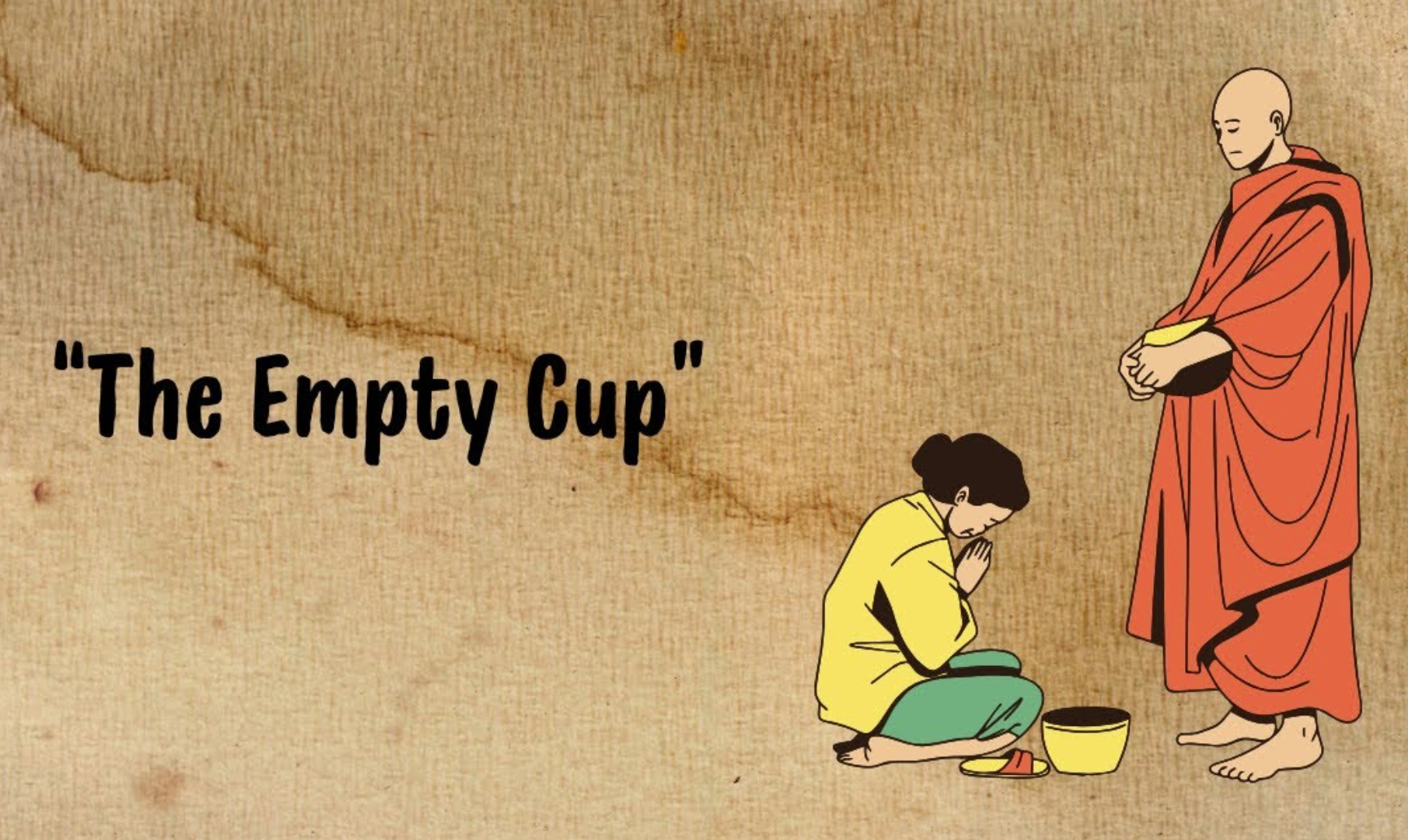
Over my life I’ve slowly made peace with death, or at least I tell myself I have. Partly I can attribute this acceptance to those beliefs in eternity for which Christians and other religions find strength and hope. And partly it is an acceptance of the parameters in which all creatures on this planet, including ourselves, come into being, grow, flourish and ultimately perish. For all that live and move and breathe, even the One we Christians look to as Lord, have and will always experience the despair and loss of dying. This “fact” of our human condition was illuminated for me in a simple yet powerful story attributed to the sage of India, the one whose followers came to regard as the Buddha, literally the one who “woke up” to reality. In it a grieving woman seeking solace in the wake of her child’s death was given, not words of comforting advice, but an empty cup. “Bring this back to me filled with rice from a home that has never known sorrow.” No explanations were offered her, nor comforting bromides to make her feel better—just an empty cup and a request. Of course, she never returned.
You may wonder why I chose to write a BLOG on this subject at this time. I am not currently struggling with grief or anger over the loss of a dear friend. But almost every day I catch myself thinking about people I’ve known who have preceded me in death. Their memory touches my heart and inspires me to appreciate who they were, what they did for me and all they have meant, and continue to mean, to me. I’m so deeply thankful that I am yet able to see and hear them, think of them, sometimes even talk to them. Perhaps that is the kind of spiritual presence that the writer of Hebrews*** had in mind when he affirmed his belief that “we are surrounded by such a great cloud of witnesses.” I take heart in believing that such a cloud, a “communion of saints” if you will, is always closer to us than we think.
Which brings me back to celebrations of life. I understand it is always a respectful, honorable, and sometimes therapeutic thing we do when we lift up and remember those whose days have come to an end. It is nice to recall what was good and decent about them while glossing over, or forgetting entirely, what in them we found irritating or unlikable. For some reason most of us find it easier to understand and excuse the failings of the deceased, once they are gone. Closure can be a good thing. Perhaps it is at such moments that a flicker of God’s loving spark may actually burn visibly within us. But why only for the dead?
What if we looked upon and treated the living in the same way? Would that change things in this world? It would certainly change us, to be sure. In fact, I’d like to think that if we released in ourselves the same kind of compassion and gratitude for the living that we so readily afford those who have died, we would discover that each of our days is, in fact, much more than a job to do, contest to win, conflict to negotiate, or trial to endure. Each day holds for us the chance to fully live within the cloud of witnesses—witnesses to God’s love and care—whose mortal journey we share on this precious earth. For if eternal life has any enduring meaning, it can’t be postponed until our eyes close in death. Rather it is our possibility and our fulfillment each day that we draw breath. What better way is there, then, to really celebrate life, than to fully live it, and love in it, with every person whose paths of living and loving intersect with our own.
_____________________________
*Romans 8:26
**Psalm 90:10
***Hebrews 12:1