

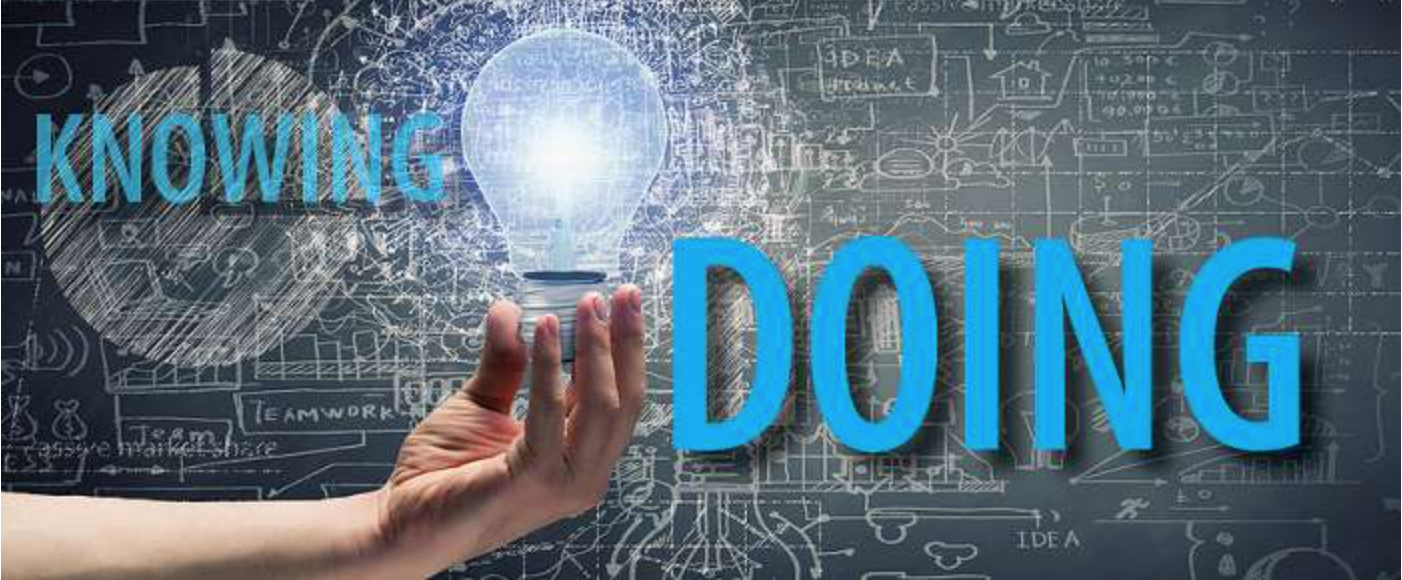
Knowing and Doing
Will the American school project, 2026-2027 version, produce what parents, teachers and students want and expect? If will all depend on how well they know what they are doing.
The start of a school year brings back a torrent of memories for most of us, but especially for those who found their professional destiny in education. That was both my vocation and ministry for 34 years, during which time I proudly plied my trade at two schools that remain near and dear to my heart: Wyoming Seminary College Prep in Kingston, PA, and Ascension Academy in Amarillo, Texas. The recollections of starting in a new class, or a new school, is one that so many of us recall as August slips into September. Feelings of excitement, anticipation, dread and even fear resurface in so many of my reminiscences from my student days and later, as a teacher and school administrator.
Looking back I can now admit that, on the whole I really loved school. I guess that is why I chose to add 14 more years of post-high school learning to the 13 seasons I spent in K-12 classrooms during the 1950s and 1960s. Now when I tally up the time my identity was shaped and my horizons expanded in a learning community—including 34 years as an educator—it is a sobering realization that 81% of my life (61 September openings to be exact) was spent in school. So the ringing of school bells at the commencement of another year hits me where I have lived, and where so much of my heart continues to dwell.
As my own grandchildren launch into their respective college, high school and middle school classes, I recall the following incident from when I was Director of Studies at Wyoming Seminary. Each August the school welcomed a number of new students to our campus, among them quite a few very bright and ambitious European teens on a one or two year experience abroad. I well remember visiting with a young man from Croatia who, in looking over the schedule of courses we had assigned for him as an incoming junior, expressed annoyance that I had not given him an upper level calculus class. Such decisions were not mine alone to make, but rested on the information that our admissions and administrative team could glean from transcripts, as well as on our best judgment of how smoothly a student might transition between two very different curricular and pedagogical systems. This particular student’s impassioned protests convinced me that he should meet with the chairman of our math department who would be in a much better position than I in assessing his readiness for our very demanding math curriculum.
An hour or so later the math chair stopped by my office, an incredulous look on his face. What he said to me about this young man has stuck with me ever since. “I’m not sure what to recommend,” he said. “This young man knows math. He just can’t do math!” After we both chuckled, we reluctantly agreed that we should at least let him give it a try. As it turned out the boy did fine once he adjusted to our system and expectations. Apparently he did know more than he seemed able to do with equations, theorems, and calculator. But the clever diagnosis rendered by my colleague spoke volumes to me then, and it has recently become a persistent voice in my head as I think about this new season of American education.
If school is about learning, and learning involves both knowing and applying what we know—“the doing part of it”—then it would seem that one can never really be parsed out from the other. For instance, one doesn’t really know how to read (what I would call the doing of reading) , without having in mind a working vocabulary and a grasp of grammar sufficient to make sense of the written word. Lacking knowledge of one’s own language, it would be quite difficult to read a science textbook or wade through a math word problem. And how could one hope to become fluent in a new language with any knowledge of how his or her own operates? Verbs, nouns, adjectives, prepositions—if we don’t know what these represent in English, will French or Spanish be more understandable? This fact of needing to know prior to applying what we know affects far more than just the 3 Rs of traditional pedagogy.
Many students look upon history as dry, boring and irrelevant. That may have a lot to do with how we have traditionally taught it as a succession of dates in which battles were fought or legislative decisions were rendered. But history is about people more than anything else, and people, then, like people today, can be both interesting and inspiring, confounding and contemptible. To really know history we must enter into the biographies of men and women who left a mark on the present moments of their brief time on this planet. Any attempt to understand who we are today depends on how much we choose to know about where we’ve been, and that necessitates that we engage in the work of reading, reflecting, comparing and critiquing. In doing that we gain a knowledge of how people like us once thought and acted in times of both prosperity and adversity. I doubt there is a better way for us to live in the present than by learning from their accomplishments and mistakes, each helping to steer us between what we should and shouldn’t do in facing the challenges of our own time.
Consider how this works in music. Knowing the sound of and intervals of pitch and rhythm seems a prerequisite for anyone hoping to create music through a mouthpiece or by manipulating strings or drum sticks—in otherwords, “doing” music without knowing it”—would render a child inept as a musician. Professor Harold Hill’s “think system” notwithstanding, River City probably never did have a band until those children acquired a modicum of knowledge about musical notation and meter. This is likewise true in that great American pastime and obsession which now so drives our school culture and calendar: interscholastic and professional sports. Is there any role for athletes who know the plays and the rules of the game, even the physics of a traveling sphere, BUT who can’t run, or shoot, or catch, or swim? I think not. Maybe that is why we need so many seats in the stands and in the gambling parlors to accommodate the hosts of people who know but can’t do, or can no longer do sports.
There seems to me be a truism in all of this. Whatever we really know about most anything in life, has its greatest efficacy when we can do something with it and because of it. For it is the knowledge that we can apply to our actions—our do-ing—which makes the greatest impact in the arenas of our social existence. It is as true in school as it is in the workplace; as true in our homes as it is in the social organizations that so define and enrich our communities. For in all of these places that so define and empower us as human beings, the fact is as certain as it is unavoidable: what we do when we speak, write, invent, create, build and perform, is the real measure, the most meaningful and lasting effect, of what we know. Knowledge without resultant action is little more than bombast. Action without knowledge behind it is, at best, foolhardy, and at worst, dangerous. In some cases, it can even be fatal.
I’ll be the first to admit that I’ve had a laugh or two watching stereotypical portrayals of students who seem neither to know much or can do much. However, when I encountered young people who wore that disguise too convincingly in my schools, I found it more tragic than humorous. If such parodies really do depict the younger generation upon which we invest so much time, money and energy in our schools—then the laugh is more on us than it is on them. For inasmuch as we confer diplomas on young people with insufficient knowledge and undeveloped abilities, then it is we who bear much of the responsibility for their ineptitude. For in wanting life to be better for them than it has been for us, we too often have lowered our expectations about what they need to know and what they must be able to do to succeed in this world. In doing so I fear we have ensured that they increasingly depend on cultural and political authorities to do their thinking, and upon convenient technologies to make their lives easier and quicker. In other words, what they know of math begins and ends with their facility using their calculators.
The American school, version 26-27, is now up and operating. My hope and prayer is that those who direct this life-changing enterprise in which learning is both the means and ends to education, will give their very best to that effort. And may they expect from their students nothing less than their fullest attention and truest interest in both knowing and doing. For their lives, and our future, depends on that commitment.
If you have read any of my BLOGS over the past five years you know that this isn’t the first time I’ve done some thinking out loud about school. In looking over the essays that remain indexed on this website, I’ve listed five of them that may be of interest for some of you to revisit. Each speaks to some different aspect of what school has meant to me, and may easily be opened by following the links listed below.
August 2021: “Open Your Baskets” — how like “Chopped” is a new school year for teachers https://www.sumthoughts.com/blog/imufyn4srfu2qmclzu76ghoyy0fway
September 2021: “Get Real” — three things I hope students get in school this year https://www.sumthoughts.com/blog/wdjj0yld9qs7v1jyxpbkydihxn7mk6
August 2022: “In the Zone” — going back to school is a journey into the unknown
https://www.sumthoughts.com/blog/in-the-zone
September 2022: “What Most Parents Want” — three things parents want for their kids
https://www.sumthoughts.com/blog/what-most-parents-want
August 2023: “Putting Parents in their Place.”— how schools and parents need each other https://www.sumthoughts.com/blog/rry695vdwg3uy8crh8rvms4yq9yu5x