
Knowing When We Are…
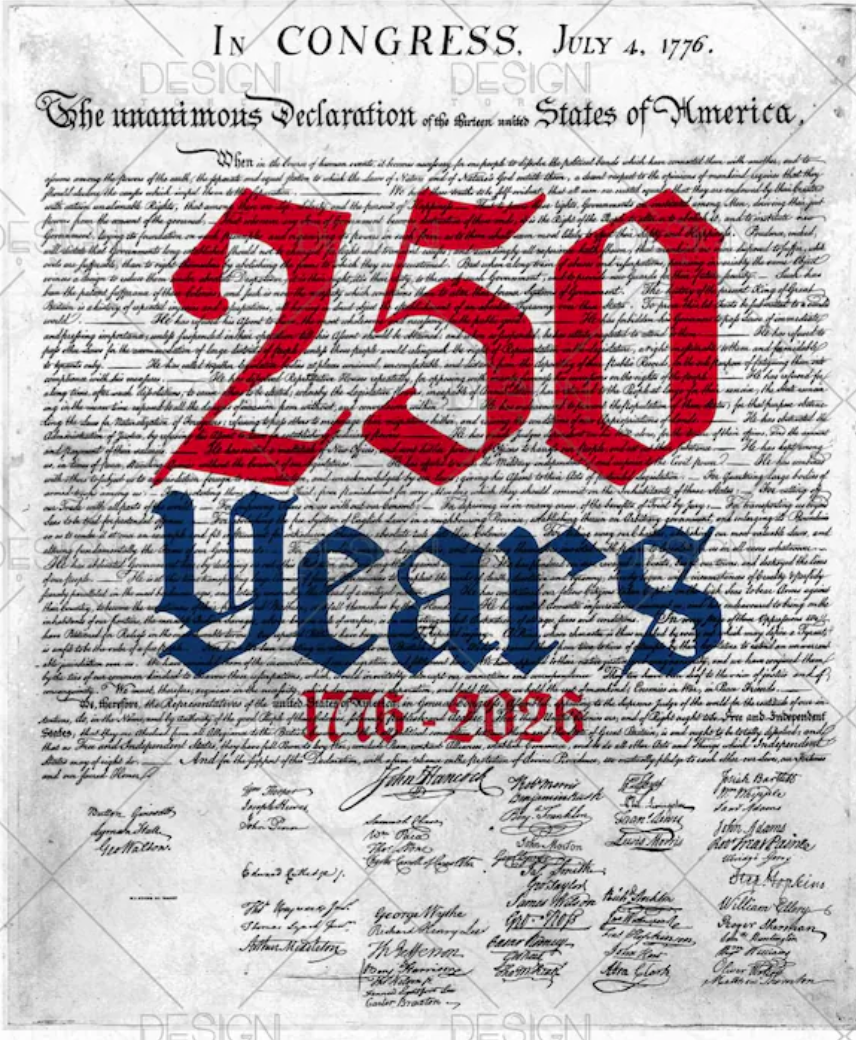
The 250th anniversary of America. The number sounds big, and it generates a fare amount of patriotic pride in those of us who revel in both the idea and reality of the United States. I wonder how many of those signers of the Declaration ever imagined their grand experiment in self-governance would last this long. Ben Franklin, for one, had his doubts.* But here we are, against many odds, and we are still waving the flag.
From a cosmic perspective, a quarter of a millennium is not really that long a period of time. Compared to the unfathomable stretch of the universe as we now conceive it (13 billion years), or even the speculated age of our solar system (4.5 billion years), 250 trips around our solar star is but the blinking of an eye. You and I, however, don’t or perhaps can’t see it that way. Eleven-figure numbers in the billions don’t meaningfully register with creatures who can expect to live perhaps 70 or 80 years, whether reckoned in biblical verse or actuarial prediction.** Our daily routines and priorities force us to measure time and “feel” time in much smaller increments, befitting the transitory, episodic nature of our memories. We count the days or weeks before some eagerly anticipated or dreaded event, or find ourselves enduring moments of boredom, anxiety or ecstasy in which time seems to stand still. Fully understanding the significance of the Fourth of July on this 250th commemoration is likely beyond the grasp of Americans whose first-hand experience of life represents little more than 1/3 of that remarkable history.
To put our 250th celebration of independence from England in perspective a bit, I cite this summary of American history—then and now—that recently appeared in the daily webfeed called The 1400.
Since July 4, 1776, the US has grown from 13 colonies with 2.5 million people to 50 states, 14 territories, and one district with more than 342 million people. We’re all connected by some 5,000 airports, 161,000 miles of federally supported highways, and 5.5 million miles of power lines. The economy has grown to nearly $32 Trillion.
That is a bit mind-blowing, isn’t it? America may have been conceived in 1776, but who can say when it was fully realized? After the Civil War? When manifest destiny stretched our geographic expanse from sea to shining sea? When we emerged as a global super power after World War II? Or was it when we added Alaska and Hawaii as our 49th and 50th states in 1959?
In the spirit of historical clarity, we should also note that America, as a geographic and cultural entity, is far older than what this year’s semi quincentennial anniversary claims to honor. Who knows when the first human migrants crossed the Aleutian landbridge in search of new homes and adventures? More millennia than we can accurately measure. And when those first European explorers “discovered” this continent, even giving it that name we still hold dear, America,***, several centuries of colonization, conquest, and subjugation of both native and imported people would yet need to transpire before the spirit of a new country was born.
If we just stick to the facts, the real 250th anniversary of our country as the democratic Republic it is today, will (and perhaps should) fall sometime during the year 2038. That year would mark the actual ratification of the US Constitution which was, is and remains the cement that holds us together as nation. This year’s festive extravaganza of fireworks and carnival-like spectacles on Washington’s Mall is really a recollection of our “raised fist” call for independence from England, not our organization as a self-sustaining government. It reminds me of the current fad of parents revealing the gender of an anticipated birth several months hence than it marks an after-the fact celebration of that new life. America’s 1776 Big Reveal would not be fully consummated for another 13 years, five of them in the struggles to wage a revolutionary war, and eight more in the trial-and-error floundering of a confederated government that just didn’t work very well. Not until the adoption of the Constitution by 9 of the 13 states in 1788 (the rest to follow by 1790), along with the creation of the three branches of government, that the America we know it today came into being as an independent and self-sustaining country.
And so it is fitting at moments of self-congratulations like this 4th of July weekend, when our nationalistic passions and exhibitionistic nature are on display for the whole world to see, that we should remind ourselves of not only who we are, but When we are in the larger historical drama of human civilizations.
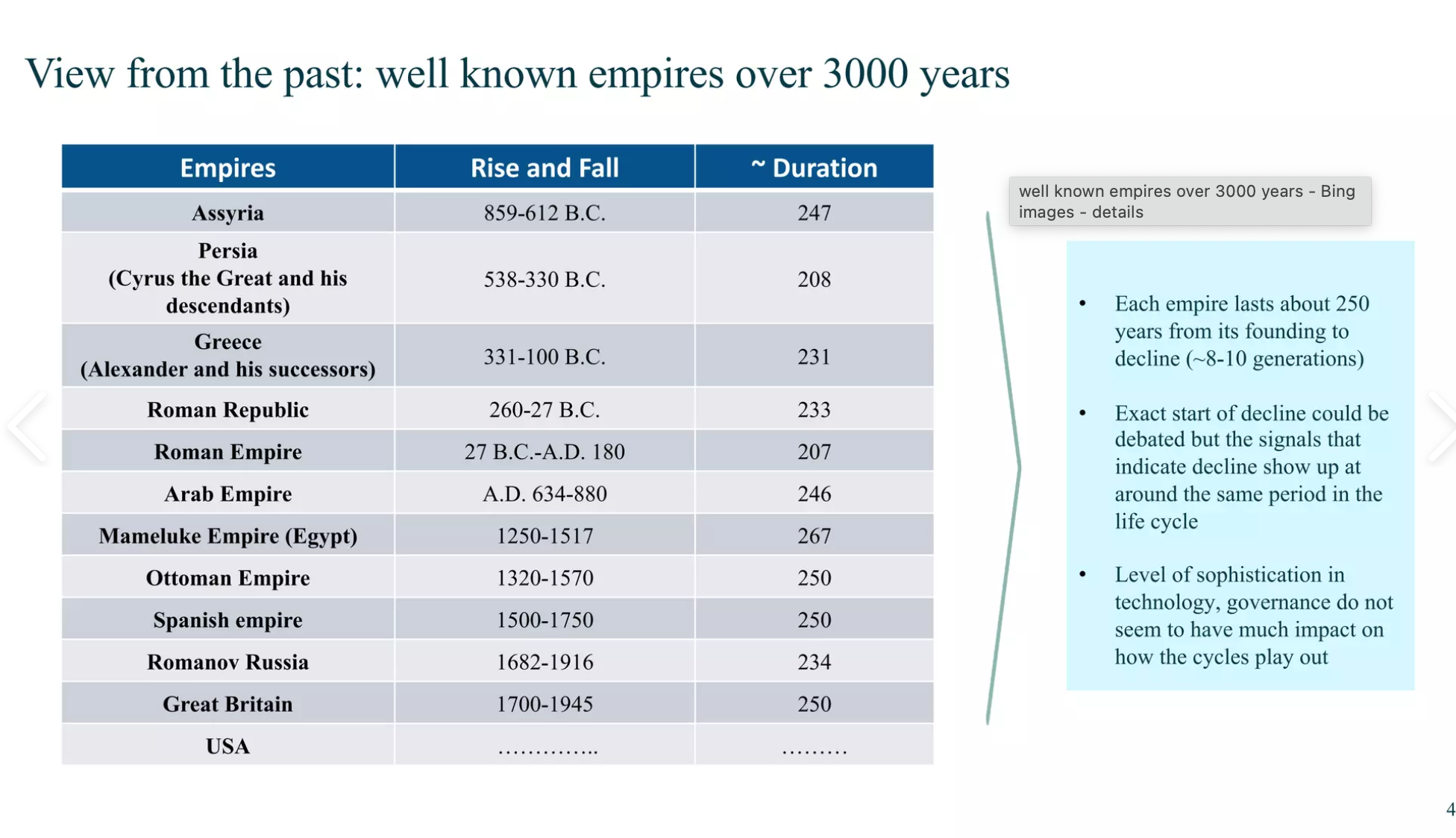
At first glance the chart would suggest that our 250 years (or my preferred 238 year post-Constitution existence) would put us in very good company among notable empires of the past. Yet those troublesome asides bulleted in the blue box do, however, give one pause, especially in terms of “when” we now find ourselves in the cycle of civilizations whose average lifespan of 238 years reads a bit too much like a doomsday clock countdown for my liking. Comparing ourselves to our predecessors who occupied center-stage in global power and influence, it does make one wonder when we really are in 2026. Are we in the upswing, on the summit, or heading down slopes of a gradual or precipitous decline? And it makes me question whether our current infatuation with MAGA-themed slogans should be tempered by more humble, honest and realistic declarations of our professed virtue.
If this is all too sobering to entertain, perhaps the longer view of world empires will stir in us some confidence that America may yet be in its ascendancy and not, as some are speculating, starting down or even well-past the tipping point towards ultimate irrelevancy or, worse yet, extinction.
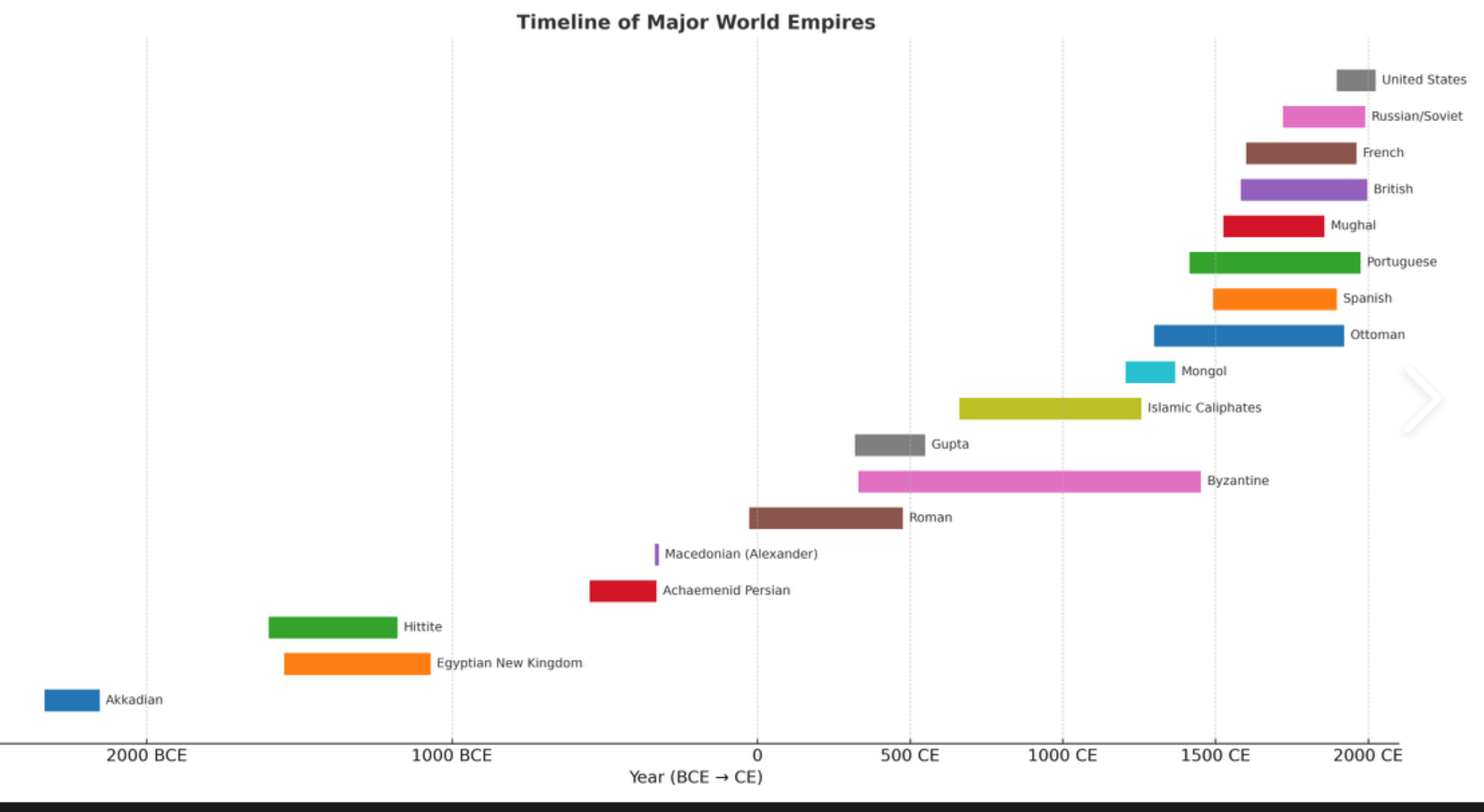
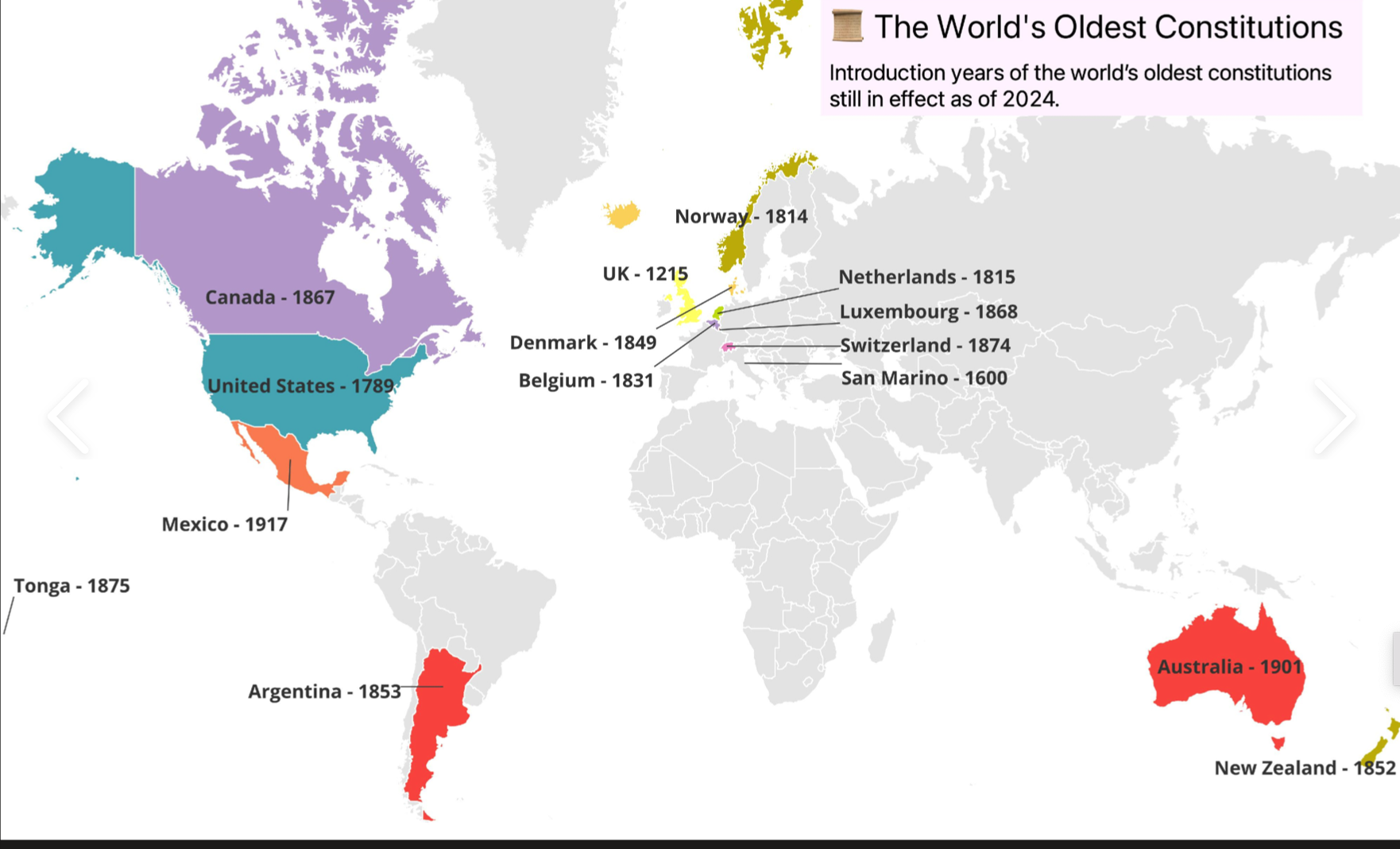
We seem to have one of the shortest bar-lines on the graph, similar to those charted for empires from Akkad, Gupta, and Mongolia. I don’t think I’ve ever heard America mentioned in the company of those once-great and now lapsed nation-states. I prefer to see our country mentioned in the same breath with the handful of constitutional governments depicted on the map below. Not counting San Marino, it makes us the second oldest constitutional government behind our once-regarded “mother” country, England. That not only speaks well of the survivability of our amendable constitution, it confirms something rather remarkable and courageous within the American ethos, sustaining us through wars, the malignant legacy of slavery, social inequalities and political divisiveness, economic booms and busts, and the transformational impact that technology has had on us, both individually and collectively. Perhaps this year’s Fourth of July will remind us of such things more than just dazzle us in the light of our own proclaimed greatness.
As we eat our hot dogs, voice our “oohs and aahs” when each successive mortar reaches its explosive ceiling and showers us with its colorful and ear -splitting display, we will likely feel both proud and grateful to be witnessing another July 4th evening in America. And as at our own birthday celebrations, we may even offer a wish or prayer that this nation, this homeland, will endure for many more anniversaries to come.
For me what is most important is that we come to terms not so much with Who we are as Americans and how we feel about ourselves in this position of our cultural egocentricity. Rather who we are and how we should feel ultimately depends on whether or not we understand when we are in history—both our’s and the world’s—and where we are in the larger world. An immigrant-populated country like ours can ill afford to act as if our current position at the top of the economic and military food chain is unique or sustainable in history. Instead we need to realize that however fervent our desires for America to be first, we cannot and should not assume global primacy among lessers who resent us trying to manipulate them in serving our parochial needs. If we dare claim to be first, it must be first among equals, in a global community in which cooperation and interdependence is the norm, not the exception. Only through such a historical perspective about the when and where of our existence will we find the wisdom and the means to survive, endure, and thrive on this planet well beyond year 238, 250, or whatever anniversary numbers we may live to celebrate in the future.
____________________
*Attributed to Mr. Franklin who, when asked after the ratification of our US Constitution if this new government was a Republic or a monarchy, is said to have replied, “A Republic, if you can keep it.”
**Psalm 90:10 declares that we may live “three score and ten” years, or “four score” if we are strong (70-80 years old), while current actuarial data for people born today gives them a projected life expectancy of 79.8 years, women (88.2) lasting longer than men (77.4).
***America is most often regarded as an honorific name given by German cartographer Martin Waldseemuller to the Italian explorer, America Vespucci, who, a few years after Columbus, identified the continents of the Western Hemisphere as separate from and distinct from the Asian lands that he, and other navigators, set out to find.